
Blog Post: Co-Creating a Mutual Aid Network for Survivors
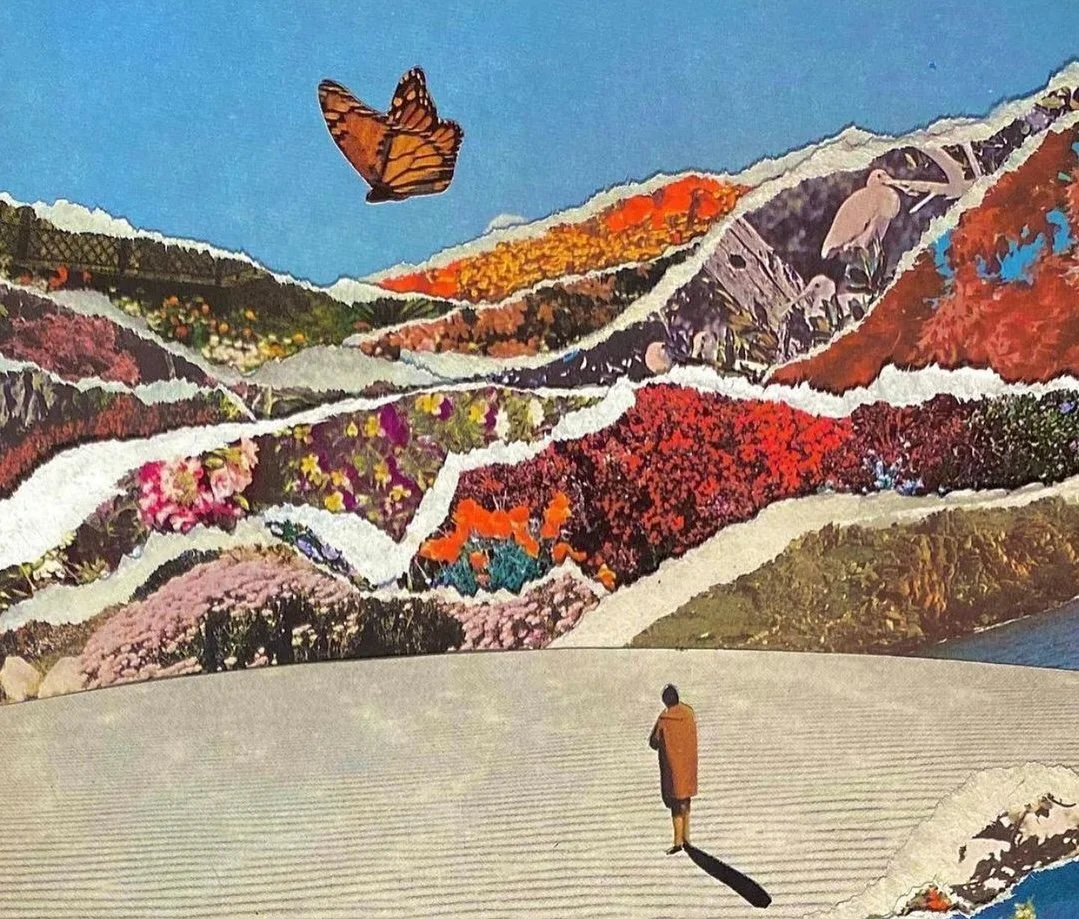
Collage by @phibstuff
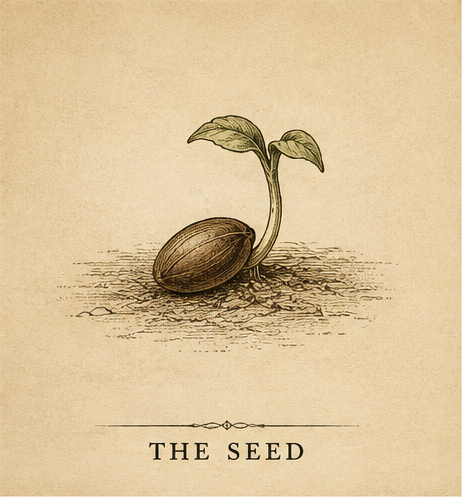
The Seed
In listening to survivors tell their stories over the years, there is one thing I have heard again and again: "The outcome would look different if every person going through this had an advocate at their side." And so I made a promise to myself: Someday I would work with a collective of other advocates to help this bring this vision to life.
By collective, I don’t just mean survivors of intimate partner violence. I mean anyone who has stood in the crucible of an in-between: This could be an experience of stalking, a major medical episode, gender transition, or a sudden financial loss.
The truth is that many people face transitions alone. The United States has an epidemic of loneliness. And it’s a particular concern for LGBTQ+ people: A recent report by UCLA and LA County Department of Public Health estimated that half of LGBTQ+ adults in LA County experience loneliness, and twice as many live alone as compared to non-LGBTQ+ adults.
To me, the greatest irony is that during a crisis such as stalking or other form of IPV, which is naturally scary and dysregulating, a person is expected to have the greatest executive function of their life: making calls to find a place to stay, seeking legal counsel, filling out dozens of request for restraining order forms…the list goes on…
And so a seed was planted: What if every survivor at a major turning point were paired with a peer support person and mutual aid network? A turning point is a time when life could feel turbulent. It is also a time that could signify a new beginning. Peer advocates provide the support all people deserve to stand in their power while navigating change.
In the yoga sutras, this transformational energy is called “agni.” In nature it’s “fire” or “metamorphosis.” Scientists would call it a “catalyst.” Doulas call it “transition.” My grandpa called it “knowing your roots.”
Transitions form deep wells from which we can draw our courage.
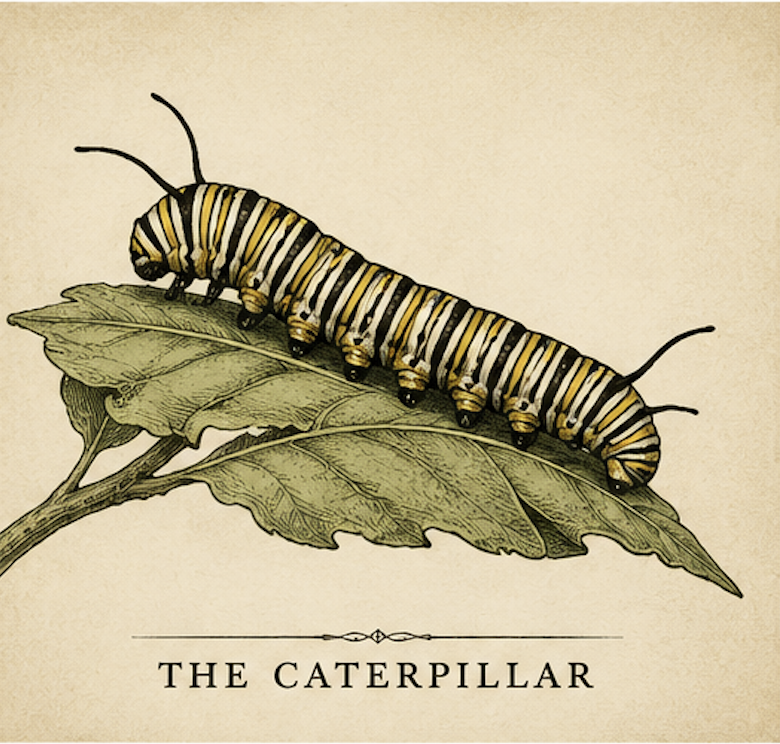
The Caterpillar
The curious thing about caterpillars is how they navigate in-betweens. While from the outside they might seem to be living solitary lives, they actually engage in many collective behaviors: They create shared homes, communicate through pheromone paths, drum on surfaces to recruit others, and synchronize their schedules.
Caterpillars don’t go it alone. They grow and thrive in community.
So I began talking to mentors and agency leaders across Los Angeles to seek out the right “landing pad” for this idea: representatives of coalitions, government agencies, shelters, health clinics, universities, community centers, mutual aid networks. Sharing the same two-pager. (If you’ve heard my plea about transition points and peer support curricula, you know who you are!)
I thought to myself: As a small consulting shop with no reserves other than what we could set aside from client projects, PHS had no seed funding. But maybe if we could design the prototype, we could pilot it locally and show initial outcomes to a foundation.
And then 2025 hit Long Beach like an earthquake, particularly for our trans, immigrant, and BIPOC communities. Executive orders, grant cancellations, budget cuts, ICE raids and escalating detentions and fear…as government shook the foundations of human rights in our country, there we were, spinning silk to create safety lines between us.
But when caterpillars slow down to weave, they aren’t giving up.
They are gaining strength.
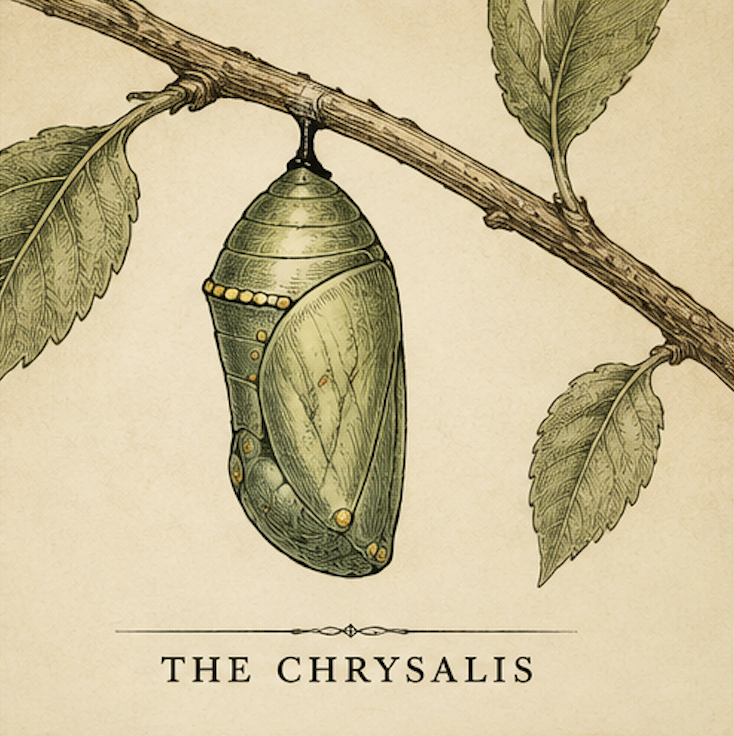
The Chrysalis
As a member of our immigrant rights network in Long Beach, I am reminded of the innate capacity that we as ordinary people have to self-organize. While the violence we are seeing is at once enraging and heartbreaking, witnessing neighbors from many different wisdom traditions and backgrounds come together to defend and support local families has also been one of the most hopeful experiences of my life.
As a survivor of stalking, I feel privileged to have also been on the receiving end of much care and reciprocity in my own journey. So while I studied Deep Democracy and adopted these organizing principles in my work long ago, it was my own experience that taught me the value of peer support.
Deep Democracy is an organizing principle that prioritizes interconnectedness. It asks every one of us to step outside of our own experience and see ourselves as part of a larger ecosystem. It also implores us to center the needs of people who are most directly affected by an injustice. As Deepa Iyer, creator of the social change ecosystem framework, asks: “How can we seek to balance or align our own values or needs with those of our broader ecosystem?”
The shared values and norms of the culture we live in affect how we relate to ourselves and to one another. What I like about these organizing frameworks is that, in a world where systems of injustice benefit from our being tired and overwhelmed, we allow ourselves to connect to our roots and to each other and build something sustainable. For neurodivergent people and people with disabilities especially, there is freedom in rejecting a dominant culture that emphasizes perfectionism, scarcity mindset, and productivity as a measure of worth. This can be the highest form of self-care and collective care.
Design work begins with community agreements and grounding in common values. Working together as a collective, we identify our north star and strategies for moving forward. Then we each focus on one or two things we’re really good at: organizing, researching, strategizing, building, facilitating, mediating, creating art, caregiving, cooking, teaching, to name just a few. I see it as a great act of compassion to ourselves and to others to take actions that are both aligned with our values and in harmony with our ecosystem.
Think of it as each spinning our own individual fiber. Then we weave our fibers together into a rope that holds the weight no one of us can hold alone.
For years, I'd been searching for an organization to help house this idea. The right "landing pad," if you well. But the wise, scrappy, resilient, changemakers I've come to know in Long Beach made me realize that I had the wrong perspective all along.
The right home isn’t an organization or place.
It is the collective itself.
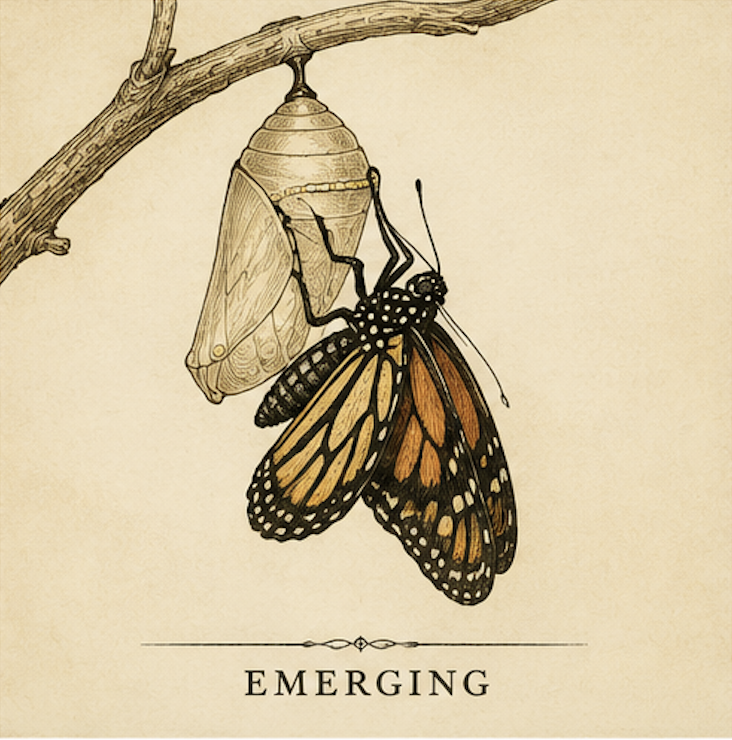
Emerging
Recently I attended a community listening session in Long Beach. The session was hosted by Ehsan Zaffar and Emma Houston of The Difference Engine at Arizona State University, a collaborative venture studio that helps changemakers transform community-driven ideas into scalable solutions to address social inequities.
The studio offers support to changemakers such as weekly community check-ins, access to journal databases, and research assistance from students and faculty. I was a bit emotional to hear this existed, and so I spoke up at the session and submitted a proposal!
This month, I received a long-awaited letter from Ehsan and Emma: PHS was accepted into the DifferenceCorps 2026-2027 Cohort! It was a dream come true. The ASU team will provide light-touch support us as we co-design a pilot of this peer support curriculum through our PHS Community Research Lab.
What I proposed is a mutual aid community and peer support curriculum with a simple vision: a day when all survivors of IPV have an advocate at their side. At its core is the transformative power of mutual support and relationship-building.
Mutual aid community: Consisting of peers with lived experience and their allies. We work collectively to support neighbors experiencing IPV from initial crisis (e.g. intake, link to DV agency, legal aid, basic needs) to transitional planning (e.g. help with move, court accompaniment, link to counseling and support group) to ongoing prevention (e.g. message board to share advice, social meet-ups, self-care).
Peer support curriculum: The modular curriculum would be grounded in ecosocial theory and build on both common factors and common elements models from mental health. In this way it is positioned to be replicable and adaptable by organizations seeking to deploy peers at other transition points (e.g. gender transition, major health episode, sudden financial loss).
Power of mutual support. The collective would be self-sustaining as a mutual aid group so that we are less bound by the funding requirements and performance specifications of Medi-Cal and other federal/state payers. It would help fill a resource gap, as mutual aid groups have for many years. As modules would include skills that are relevant to community health worker certificates, trainings could potentially help sustain the program in the longer-term.
Power of relationship-building. Peer support is powerful because the relationship is bi-directional. It empowers the recipient through crisis support, relationship-building, and resources. It empowers the volunteer by holding them accountable to prioritizing their own journey of healing and recovery. Research shows that “talking the talk” with others helps us continue to “walk the walk" in our own lives.
Over the course of six months, we will convene a collective to design an initial prototype to pilot locally in Los Angeles or Long Beach. What we create will be owned by the collective, and the idea will evolve as we set our group values and vision. The destination isn't fully mapped yet, but really that’s the point.
Butterflies provide a remarkable example of an emergent process: It’s fascinating to think that no single monarch makes an entire round-trip migration. Each generation completes only one part, but the migration persists because of inherited instincts and environmental cues that guide successive generations. Their resilience comes from the collective.
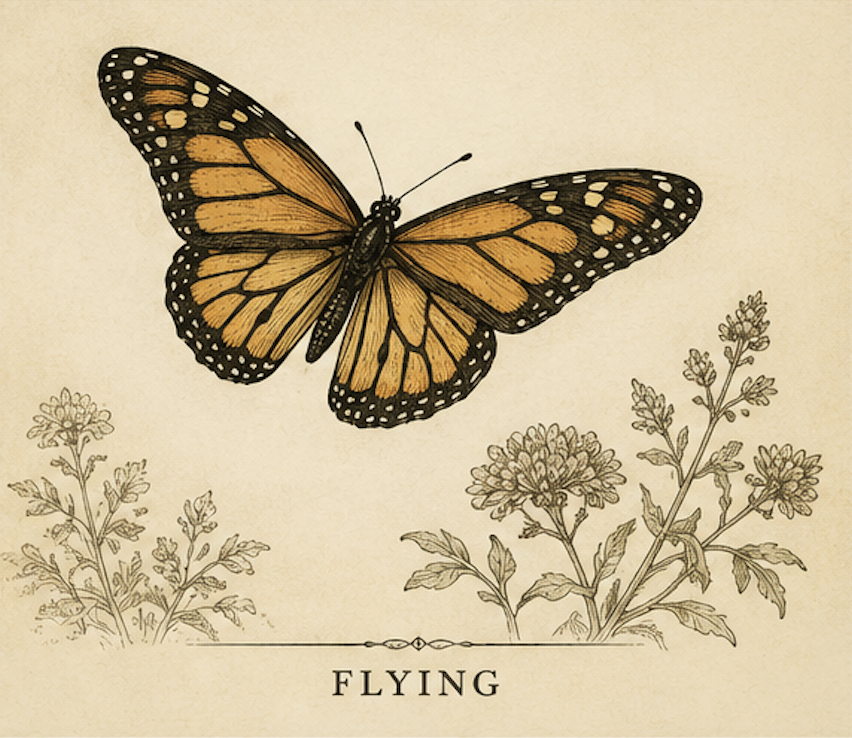
Taking Flight
Over the years, I have learned from extraordinary survivors, advocates, organizers, visionaries, teachers, and colleagues whose work has shaped my understanding of community safety and public health. I have also had the privilege of working alongside the remarkable consultants on the PHS team and learning about peer support from amazing advocates and role models at Downtown Women’s Center and the Domestic Violence and Homeless Services Coalition, The TransLatin@ Coalition, Positive Results Center, Oregon Department of Justice TRIP Team, and Partners In Health. Changemakers from each have contributed to the spirit and motivation behind this project.
If you’re working on something similar, or if this idea resonates with you, please contact us. Whether you have a conversation to offer, an article or contact to share, lived experience to contribute, and/or interest in shaping this collective, your presence matters. Human-centered design begins by listening, and I hope this community reflects the wisdom of everyone who chooses to be part of it.
As this project unfolds, I'll be sharing updates here and on IG (@peoples_health). My hope is to document the design process as honestly as possible: the successes, the mistakes, the pivots, and the lessons learned along the way. Too often, we only see the finished product. I want to share the messy, iterative, collaborative process that comes before it.
A butterfly's migration is both an individual and a collective journey. Each butterfly flies under its own power, yet the migration depends on many individuals, each contributing their part. I hope this project grows in the same way: not through the efforts of one person or one organization, but through many individuals, each contributing their own experiences, wisdom, and strengths toward something larger than ourselves.